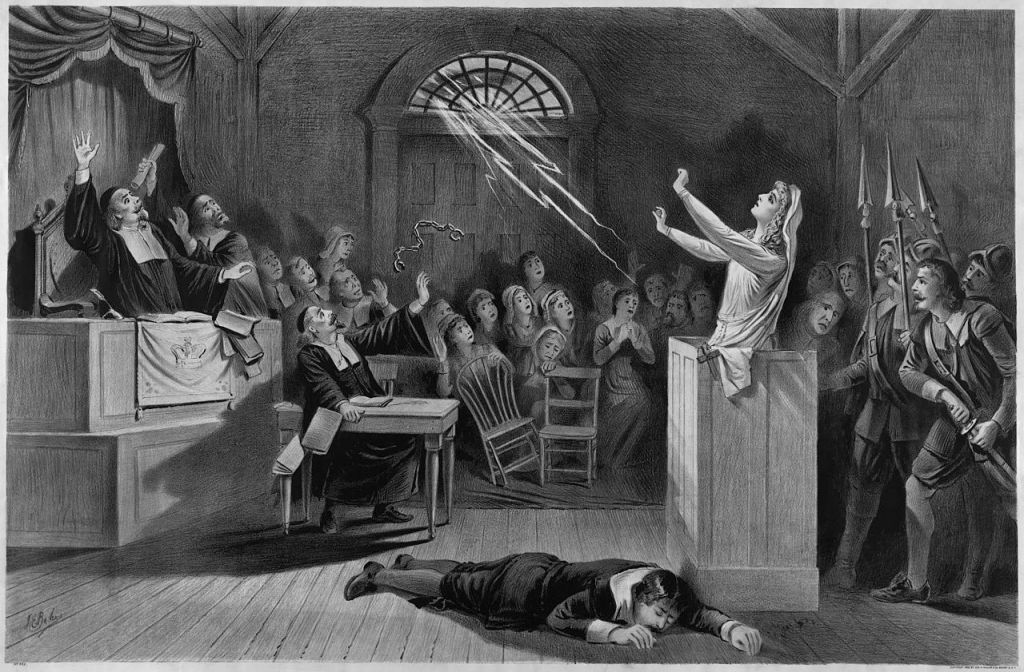
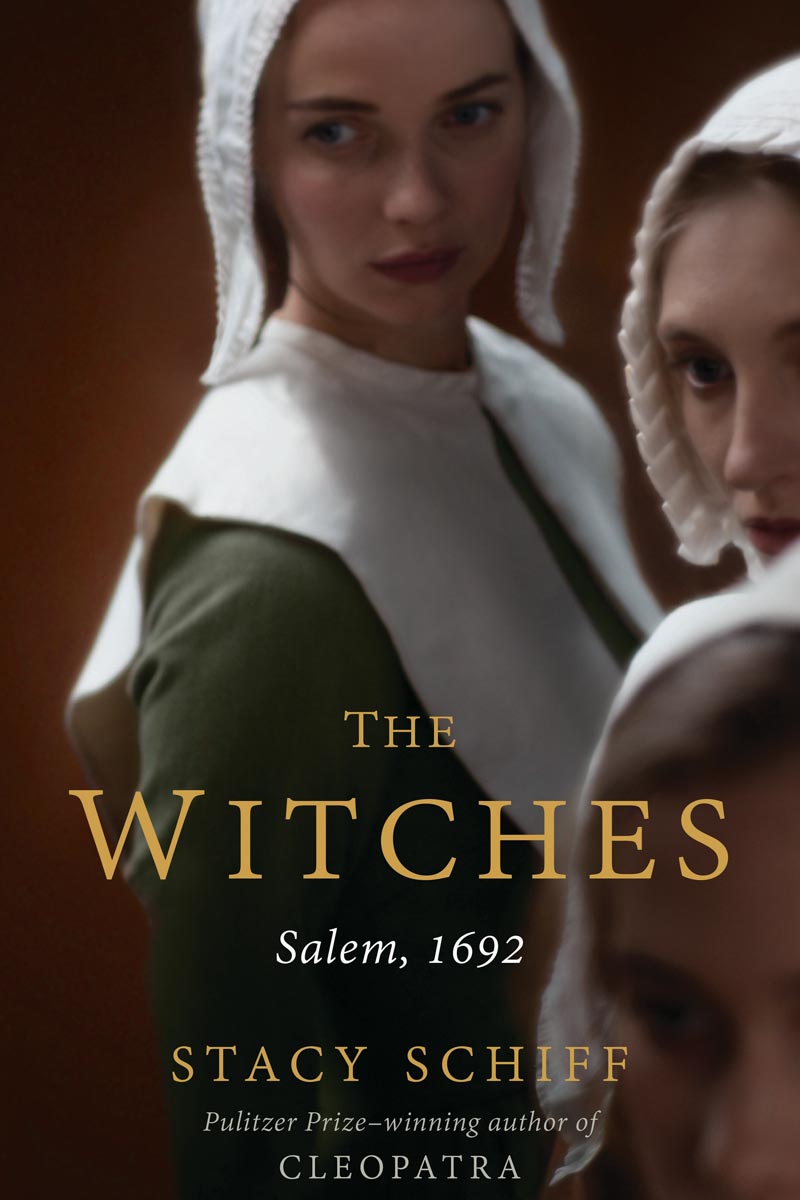
In 11th grade, with a mind that told me I was a Greek god and a body that looked like Jeff Goldblum 2/3rds into The Fly, I was a young man whose confidence-to-value ratio was unforgivably lopsided. In this tumultuous era of unwarranted conviction, I was exposed to The Crucible. Like any young-adult who watches a movie about a community hanging citizens because a bunch of 12-year-olds told them to, I figured all these historical figures not only lacked 21st century information, but also 21st century intelligence. “Wow. They were all just dumb. Case closed.” Then the film was logged away into the ever-expanding archive of interesting ideas shit on by uninteresting teenagers. But then, many years later, as all terrifying thoughts do, the idea resurfaced. It came when I saw a copy of Stacy Schiff’s The Witches in my University library in 2016. “Oh yeah, Salem. The place where all those idiots thought everyone was a witch and obliterated any sense of security or peace within their community.” But there was a flash of an image: a pitch-black village in the freezing cold of new England, families huddled in corners, reading their bibles and rocking babies to sleep in front of the fire. The Crucible showed the frenzy of Salem amidst the chaos, but clearly there had to be more. The governing bodies of the time could not so easily have been convinced. I picked up the book which, according to the reviews scattered across its back cover, would engagingly unveil the hidden minutiae of the 1692 catastrophe. “Okay, I’m in.”
The main reason I picked up this book is because it was described not only as “gripping” and “tense,” but also as containing novelistic qualities. Histories have a much larger chance of becoming a bore compared to other nonfiction, not because the past is boring, but because the retelling of it can so easily become lazy. “This happened, then this happened. Then, this happened.” Rinse and repeat. So, when picking up a book of history this tome-like (The Witches comes in at 512 pages), I found myself eased by the prospect of reading something akin to a roman à clef. I didn’t mind if a few flourishes were thrown in or some lines of dialogue were guessed at, as long as the important stuff was true.
The Book
The simplest way I can illustrate how engaging I found The Witches to be is to just say how long it took to read. I purchased the book in late 2016. I finished it in January 2019. Somehow, this book managed to be a slog, but not for obvious reasons. Schiff knows how to jump around and keep the book from becoming monotonous, this is definitely true. But the jittery style of her retelling went a little too far in the other direction, making it difficult to keep up with the names, acts, dates, letters, books, and accusations all swirling around the 1692 trials. The Witches has no central guiding light through its journey into darkness. Instead, it is as if Schiff is a photographer trapped in a pitch-black room and must use the flash of her camera to find her way out, illuminating small portions of the area for only brief seconds at a time. I fully admit this may not be her fault. Many times, she mentions the scant record-keeping of the officials back in the 17th century. But for the reader, it can be a disorienting effect.
None of this is to say, however, that she doesn’t do an incredible job of compiling the loads of information that were at her disposal, and somehow wrangling it all into something cohesive. I can’t imagine the amount of work it must have taken. And the book’s topics are still inherently interesting: What could the cultural causes of such an upheaval have been? How can a community come back from such a place, where neighbors are directly responsible for the deaths of other neighbors? Were there any doubts among the community regarding witchcraft? Any? Schiff answers, or comes close to answering, many of these questions. She dives into the state of almost absurd boredom these people lived in, and how the tight grip of their devout beliefs could put some color into the black and white portions of their lives. She explores the magistrates’ attempts at dissecting the nature of guilt, of whether a person can be used by the devil without even knowing it. Many times, defendants claimed they had never met a witch in their lives, to which the judges asked, “then how do you know you are not one?” The in-fighting amongst the judges and priests as to what constitutes witchcraft, and how much reliability could be placed on “spectral evidence alone,” is fascinating. And the grim scenes painted by Schiff of the hangings themselves are like that infamous car-crash you just can’t look away from.
I learned a good amount about The Salem Witch Trials by reading The Witches, there’s no doubt about it. If anyone ever brings up the topic at a dinner party or at a bar, I can confidently say that I have more at my disposal now than simply “yeah, that was wild.” But that’s also the nature of any history book. If you buy a book on the Civil War, hopefully you will have learned something by the time it’s over. I bought Schiff’s particular iteration because it was supposed to do more than just inform. It was supposed to entertain while presenting its truths. Unfortunately, I don’t think it quite lived up to that hype. If you are interested in the Salem Witch Trials (and how couldn’t you be?), and you know what it is like to trudge through an unforgiving text, The Witches could be the book you’ve been waiting for. For everyone else, though, and especially those looking for that novelistic flair, you may have to seek out your demons elsewhere.

 NickDeNardi.com
Leave a comment