
Total Runtime: 230 minutes
Language(s): English
Genre(s): Supernatural and Psychological Horror
Directors: Dan Gilroy and Nicolas Winding Refn
Welcome, welcome. Sit anywhere you like. The seats are many, and leather, but most are torn and saggy from decades of use. You won’t find any of those fancy candy bars people seem to be raving about in other establishments, no Mounds or Charleston Chews here. But our popcorn boy is well trained in the perfect pop, and our coca cola, the only soda we proudly serve, is shipped in monthly. I highly recommend our special number 5, which combines these delicious treats for your viewing pleasure.
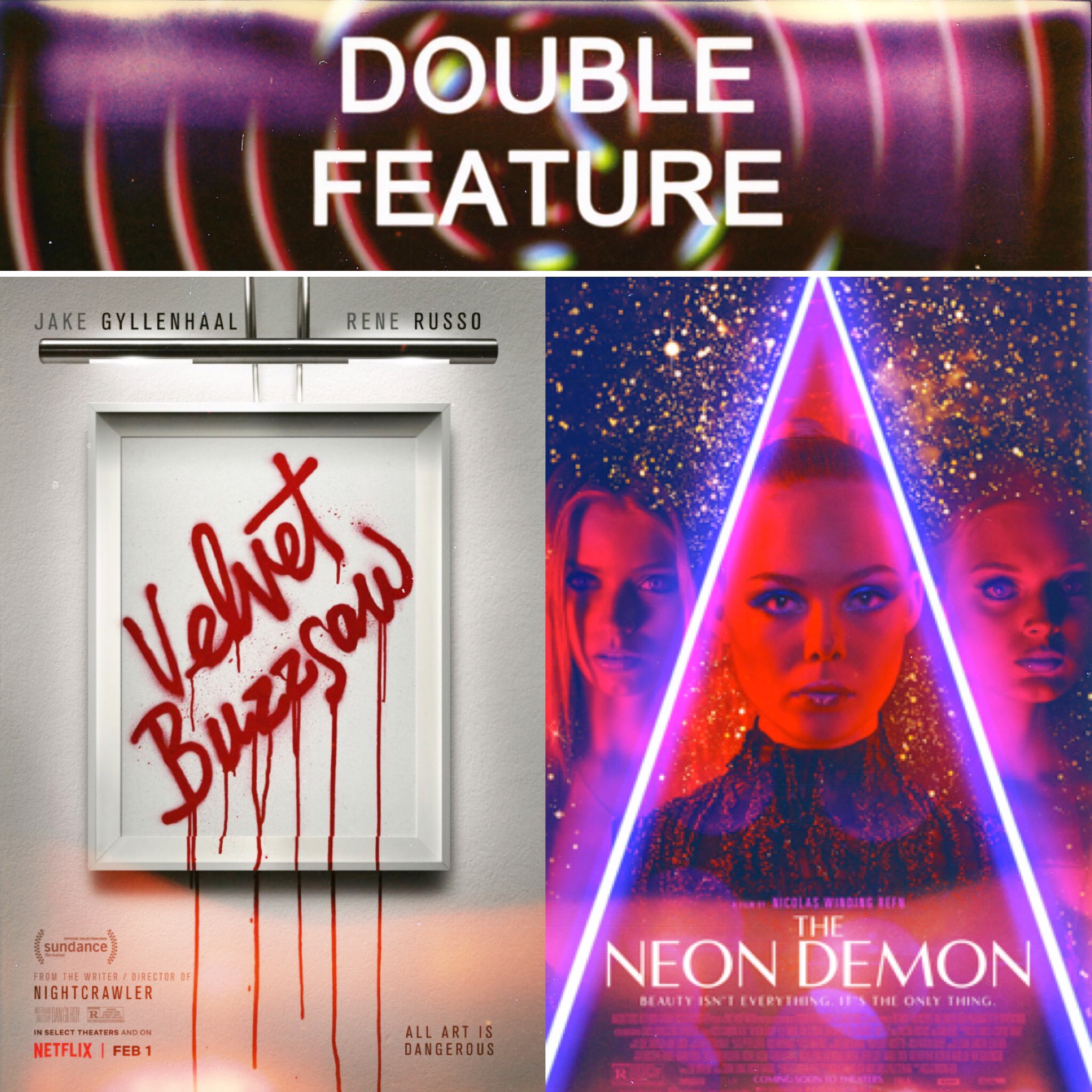
Tonight is a very special screening. These two films were sent to us by our contact in the northwest. They have traveled many miles through rain, fog and desert so that our wonderful projectionist, old and delicate as she is, may arrange and display them, again for your viewing pleasure. Tonight, as the curtain is drawn and the blue beam illuminates the many floating particles up above your curious heads, may you ponder, as I have, the many questions these filmmakers dare to put to us. Beauty, art, aesthetic, money. Oh how delightful these themes are. Also, kindly remember to silence all devices. Nardi’s House of Cinema proudly presents tonight’s double feature: Velvet Buzzsaw & The Neon Demon.
The B Movie
Velvet Buzzsaw (2019)

Natalia Dyer, Daveed Diggs, Billy Magnussen, and John Malkovich
From the writer and director of Nightcrawler comes yet another Gyllenhaal-powered vehicle that delves into a seedy underbelly. The art-world is turned on its head when a virtually unknown painter named Vetril Dease is discovered, but only after his death. Influenced heavily by Henry Darger, an icon in the Outsider Art genre who left hundreds of works to be discovered after his passing, Velvet Buzzsaw uses this premise not only to investigate the ethics of post-mortem fame and recognition, but also to inject elements of the supernatural. After all, unlike Darger, Mr. Dease writes explicitly that his art must be destroyed upon his death. Too bad nobody listens.
Much like Louis Bloom in Nightcrawler, the characters in this more recent film are generally inhuman; they are characters in the realest sense, all playing their part as thinly veiled desires in human form. Their key desire? Money. Unwittingly, this simple motive is what makes Velvet Buzzsaw the B-movie in tonight’s Double Feature. The film detaches us from its characters, showing them to be emotionally hollow mannequins in a slick, fast-paced world obsessed with art for all the wrong reasons, but the central conceit isn’t powerful enough to push the characters into the realm of hyper-reality (ala The Neon Demon, Cosmopolis, or any movies by Yorgos Lanthimos). Their shallowness often seems to be there for convenience, to push things along in a simple way. There is no resonance to their absence of humanity. This leaves the characters in Velvet Buzzsaw not only unlikable, but also generally uninteresting. Yet, as we all know, the best way to dispense with uninteresting characters is to kill them off in interesting ways. This is something the film readily offers.
Velvet Busszaw seems to be reaching for something more, but lands instead in the realm of the the Final Destinations of the world, albeit with a little detachment and sardonicism. For these reasons, it makes the perfect prelude to The Neon Demon, which not only enters the realm of hyper-reality, but lives there.
The A Movie
The Neon Demon (2016)
Christina Hendricks, and Keanu Reeves
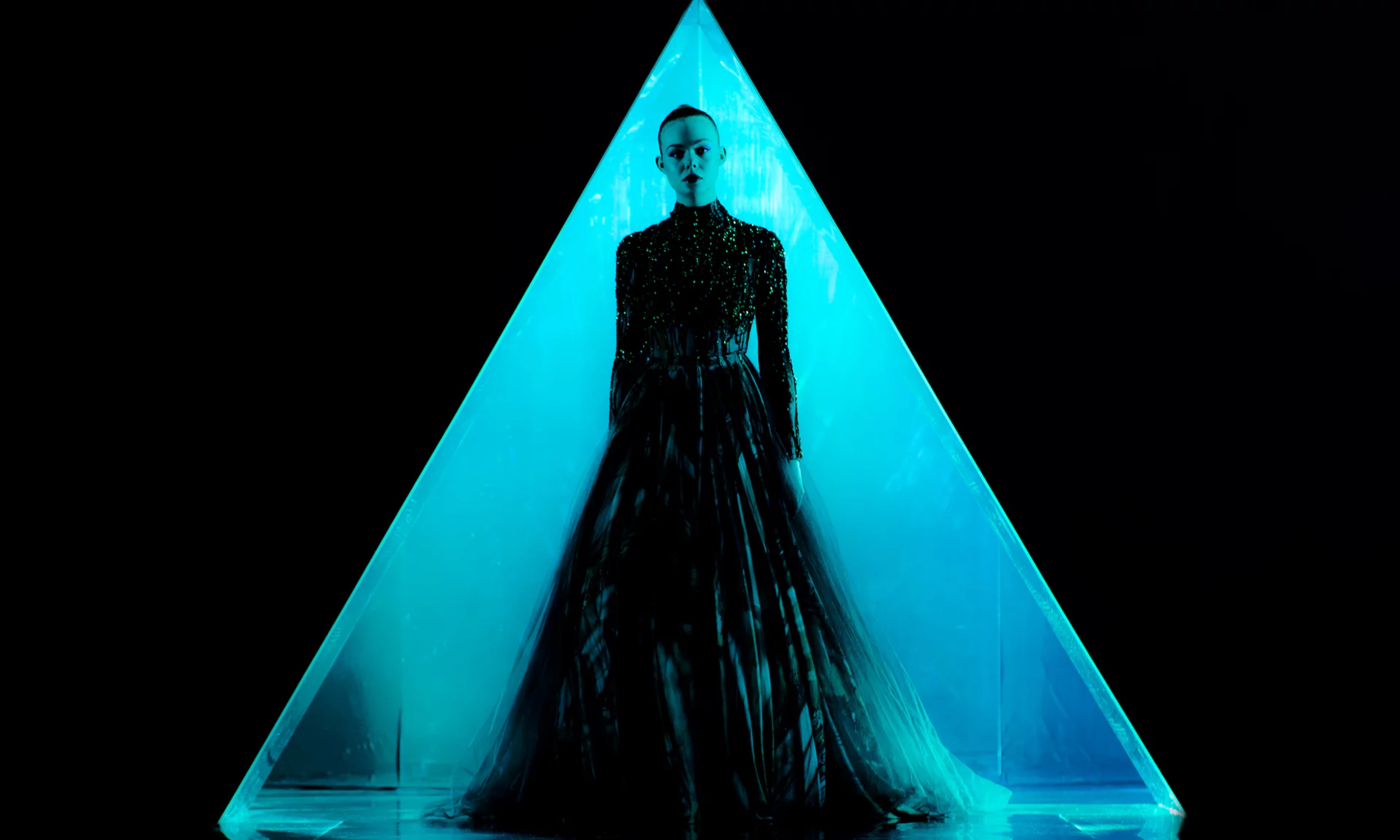
The Neon Demon positions itself in that genre of film that evades traditional definition while also being easy to describe. Simply, the movie is designed, in both form and function, to operate as primarily experiential. Like Only God Forgives before it, The Neon Demon is an aesthetic exercise in the original sense, not as the word has been co-opted in popular culture. And the reason these types of films evade traditional genre-definition is because “genres” typically refer to content. A movie focused on aesthetic, or a primary concern with drawing attention to its own form as a pathway for meaning, however, can be about anything. Experiential films employ techniques to elevate the medium of their expression to the same level as the content they are expressing. They are your Inherent Vice‘s, Tinker Tailor Soldier Spy‘s, Bandersnatch‘s, just about anything by David Lynch or Gaspar Noé, and of course The Neon Demon. Buried in all of these is a story, yes, but a story sharing its meaning-real estate with the medium through which it is told. The two become intertwined, as opposed to one containing the other. And in a story that focuses solely on beauty – “beauty isn’t everything, it’s the only thing” – The Neon Demon has the ideal material with which to experiment and elevate its formal elements.
On the sliding-scale of the experiential, Nicolas Winding Refn’s lastest film picks up exactly where Dan Gilroy’s leaves off, then vamps it up to 10. Like the models his story revolves around, The Neon Demon is dry and lifeless, yet hypnotizing and beautiful. And where Gilroy seemed unable to detach from story as much as he may have hoped, leaving us with characters having just enough humanity for us not to care, Refn is fearless in constructing the monsters that inhabit his film. The world we are shown is pristinely unnatural, as if a whole industry could be caught in the same fugue state, endlessly polishing every surface, eyes glazed over, repeating the mantra that defines their lives. “Beauty isn’t everything…” The whispers of agents, photographers, and magazine reps circling around every corner. “It’s the only thing.” The result is a clinical, disturbing entrancement that follows a young model skipping merrily into the world of the unreal, mistaking its beauty for something realer than herself.
Velvet Buzzsaw and The Neon Demon are spiritual continuations of each other. The small feeling of a disjointed world filled with human-less people found in the first film, is rewarded and taken to the extreme in the second. And for those who don’t like walking away from an experience completely depressed (and not even the good, emotional after-movie depression when your heart strings have been torn out), you will find solace in the sweet, sweet memories of terrible people dying horrible deaths earlier in the night.
Velvet Buzzsaw is available on Netflix.
The Neon Demon is available for rent on Amazon Video or presumably for free on other platforms if you are resilient enough.
 Nick Denardi