Should you be angry, or afraid?
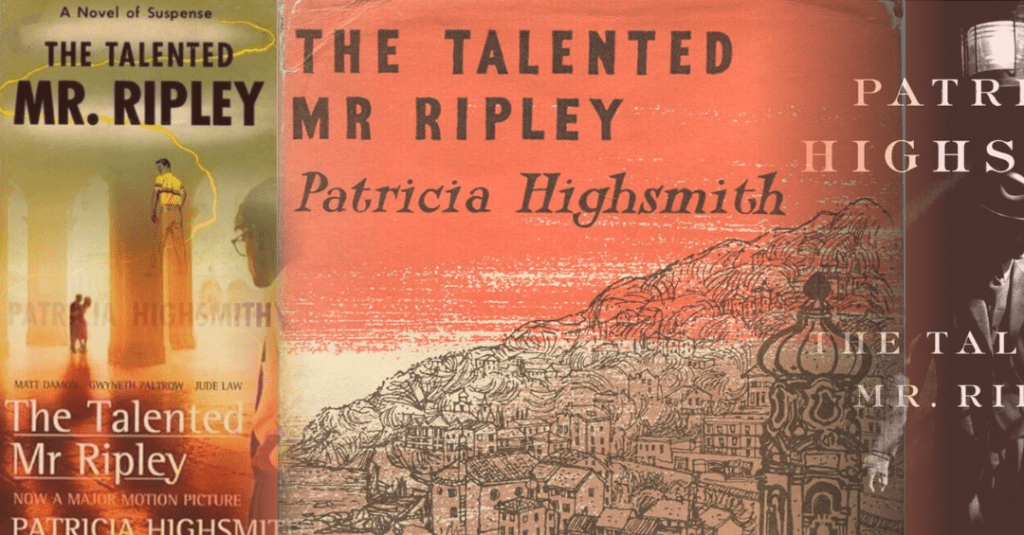
The varied and disparate covers of Patricia Highsmith’s The Talented Mr. Ripley seem to playfully mirror the types of story Tom Ripley would choose to believe about himself. A man lost in a void, a man pining for an identity capable of love, a man overlooking Mongibello, Italy. In the most insidious mindset, a man in the dark, waiting. Add in a spate of film and TV adaptations, and you have a veritable catalogue of Ripleys to choose from. Even as he transcends fictional forms to jump between literature, TV and film, he is still exactly who you want him to be, until he isn’t.
But I should start over.
While there is certainly something terrifying about someone you know potentially being a mask for a more unknowable entity, the Highsmith formula is to put you behind that very mask. She is the absolute master of a genre I didn’t even know about: not the Whodunnit, but the iDunnit. In ways visceral and mundane, she transports you into that common nightmare of being on the run, knowing you’ve done something terrible even if you try to forget.
What’s worse, is once you are behind this mask, you see there are relatable desires there. There are emotions, traumas, and naive dreams. You see that Ripley, well before he commits his first crime, is already running. The crime merely makes manifest his instinct to run. He like an animal, part predator and part prey, using the mind of the latter to validate the actions of the former.
In many ways, The Talented Mr Ripley is a precursor and pre-antithesis to Bret Easton Ellis’ American Psycho. Whereas Patrick Bateman is programmed to win at American capitalism and consumerism, and use both as a grotesque shield to get away with his perversions, Tom Ripley seeks to escape capitalism in favor of consumerism by itself, and to do it as far away from America as possible. Ripley’s attempt to shed his identity contrasts with Bateman’s method of elevating his identity to absurd levels. This leads to different revelations, as we know.
Bateman’s crime, above all, is that he gets to be himself, and when he does not face justice, we are angry. Angry because the social forces of class and capital do not even bother to hide their brazen evasions of justice. Being immune is the point, and it is an indictment on the system that the system incorporates into itself and swallows whole. In other words: get over it.
Ripley’s crime, though, rather than getting to be himself, is that he gets to be someone else. When he evades justice, we (much like him) become terrified, because the game he plays is more sinister, more subtle, and ultimately more disturbing. Behind the mask is a quiet set of logics that, in assimilating the unjust nature of the system in favor of the American Psycho, calmly acts as the un-American Psycho. The empty, smiling face of a creature who consumes all, even its own identity.


 NickDeNardi.com
Leave a comment